What is up there in a house from before 1980
Much of the housing for sale in Paramount went up between the late 1940s and the 1970s. The chimneys on those houses share a family likeness, and each part ages in its own way. A buyer who knows the parts reads the report faster and asks better questions of the seller.
- Clay flue tile. Square or oblong sections stacked inside the brick and joined with mortar. They crack with heat, shift in quakes and lose their joints. From the firebox you see the first foot or two.
- The damper. Usually a cast-iron plate on a hinge just above the opening. Rust welds it shut, the frame cracks, or the handle went missing years ago.
- The smoke chamber. The sloped funnel between the damper and the flue. Older ones were left rough, with stepped brick that traps soot.
- Brick and mortar. Early houses used softer lime mortar that weathers to sand at the top of the stack, where the rain hits hardest.
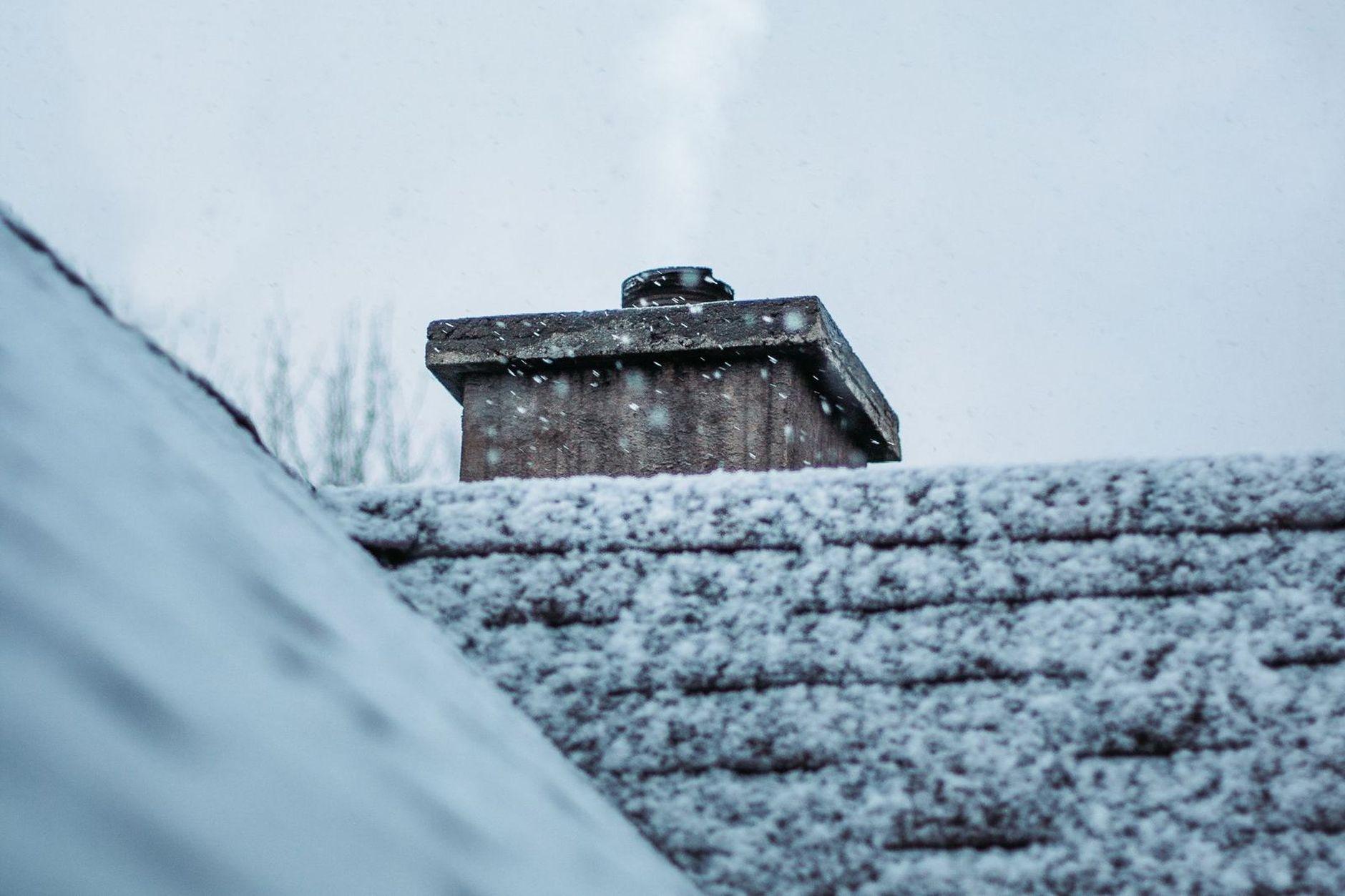
- The crown. A concrete or mortar cap around the flue tile at the top, often thin and cracked by now.
- Flashing. Sheet metal where the stack meets the roof, renewed at every reroof, sometimes badly.
Why the standard wants the deeper level for a sale
NFPA 211 ties the depth of an inspection to what has changed. A house changing hands is one of those changes: a stranger is about to light fires in a chimney whose past they cannot know. So the standard asks for a Level 2 at a sale. The flue is filmed from bottom to top, the roof and attic are checked, and the report is written for someone who was not there.
A general home inspector does valuable work, but on a chimney they usually stop at the opening and the roof line, and the report often ends by sending you to a chimney specialist. The Level 2 is that specialist look, and on an older house it is where most of the surprises are found.
Part by part: what the camera and the visit look for
On the clay tile, the camera follows every joint. We record cracks, gaps, missing mortar, pieces that have dropped, and any offset where a section moved in a past quake. Those stills go in the report with the depth they were taken at.
On the damper, we open and close it, look at the plate, the seat and the frame, and note rust-through.
In the smoke chamber, we look for open joints and for shiny, tar-like deposits that point to years of heavy use without sweeping.
On the roof, we look at the crown for cracks, the brick above the roofline for soft joints, the flashing for lifted edges and the cap for a working spark screen.
In the attic, we look at the brick where it passes the framing, and at the wood beside it for scorch marks or water stains.
What the findings cost to put right
A finding turns into a number in one of two ways. Some fixes repeat closely enough that we publish a range:
| Finding | Usual fix | Our price |
|---|---|---|
| Heavy soot in the flue | sweep | from $445 |
| Water pooling behind a wide stack | peaked diverter built behind it | $475 to $1,065 |
| Same, with tired metal on every side | diverter plus all flashing renewed | $710 to $1,750 |
| Ceiling stain by the chimney after rain | water entry traced and stopped | $590 to $3,550 |
No spark screen, or a rusted one, means a new cap. That cap is quoted on site.
Others, like a cracked run of tile, a broken crown, a seized damper or a leaning top, depend on the house. For those the report names the item, and a written scope with a price follows from us.
Those figures are what a buyer takes to the seller when asking for a fix or a credit. A finding with a number beside it is easier to settle than a line that only says further evaluation.
Book the Level 2 for the house you are buying, and mention the build year from the listing and how long your inspection window runs.
Timing inside escrow
The chimney visit belongs inside your inspection period, with time left over to get repair numbers before the period closes. Buyers who wait for the general report to flag the chimney lose days they cannot get back. We send the finished report to you and, if you name them, to your agent.
When the seller already has a report
A seller may hand over a chimney report done before listing. Check its date and its level. A Level 1 from last winter tells you nothing about the inside of the flue. A recent Level 2 with stills in it may be enough. If anything has happened since, such as a quake or a chimney fire, it is not.
After you get the keys
If you buy the house, keep the report. It is the starting point for the first sweep, and it tells the next inspector what was there when you bought. More detail on the visit is on the Level 2 inspection page, the home sale page covers the paperwork side, and if the report turns up a cracked flue, the relining post explains that repair.
Buying in Paramount or a city close by? Our contact page takes the booking. The house address and the end of your inspection window are what we need to set the visit.
Turn This Guide Into a Written Scope
Elmore Chimney Sweep works across southeast Los Angeles County. Each scope lists the defect, the code line or NFPA 211 clause behind it, the price and whether the city wants a permit, so you can weigh the job before anything is booked.